


Graduate school scholarships can make the difference between confidently enrolling in a graduate program and stressing over tuition bills. If you’re a student pursuing a master’s degree or doctoral program, or a parent helping plan the next step, you’re probably wondering: How do we actually pay for this?
In this guide, you’ll learn:
- Whether scholarships are available for graduate students
- The best types of graduate school scholarships and fellowship options
- How to find scholarships and funding opportunities
- How the scholarship application process really works
Let’s walk through this step by step so you can pursue a graduate degree without feeling overwhelmed.
Speak with a college coach today!
Speak with an expert college coach and learn if working with one is right for your academic journey. Free 15-minute consultation, no cost, no obligations.
Are There Scholarships for Graduate Students?
Yes, there are scholarships for graduate students in the USA. They just look a little different from college scholarships.
Many students assume financial aid for graduate school means loans only. But that’s not true. According to the National Center for Education Statistics, graduate and professional students receive billions in grant aid annually. That includes institutional aid, fellowship funding, and external scholarships.
Here’s what makes graduate school scholarships different:
- Many are tied to your specific degree program
- Some are merit-based, others are based on financial need
- Some cover tuition only, others include living expenses
If you’re currently enrolled in a graduate program or planning to apply, graduate students are eligible for far more funding opportunities than most realize. The key is knowing where to look and understanding eligibility requirements early.
Types of Graduate School Scholarships and Funding Options
When students are pursuing a master’s or doctoral degree, funding usually falls into several types of scholarships and support.
Merit-Based Graduate Scholarships
These awards are based on:
- GPA or grade point average
- Academic excellence
- Leadership
- Research potential
Applicants must often meet minimum eligibility requirements, such as being enrolled in an accredited graduate program.
Can I get scholarships for graduate schools?
Yes, absolutely. Graduate school scholarships are available through universities, professional associations, foundations, and national programs. Many students qualify but simply don’t apply.
Need-Based Scholarships and Financial Aid
If financial need is a factor, start with the Free Application for Federal Student Aid. Completing the FAFSA determines eligibility for grants and loans and is often required to access your school’s financial aid office support.
Many scholarship programs require FAFSA completion as part of the scholarship application process.
Fellowship vs. Scholarship
A fellowship typically:
- Covers graduate school tuition
- Provides a stipend for living expenses
- May require teaching or research
Doctoral students often receive fellowships for new research projects. These funding opportunities are common in doctoral and master’s programs.
Foundation and External Scholarships
Foundation scholarships and external scholarships are offered by:
- Private organizations
- Professional associations
- Corporations
- Community scholarship funds
These scholarships are open to students pursuing graduate studies across the USA and may provide grants used for tuition or related costs.
How to Find Scholarships for Graduate Students
Finding graduate school scholarships requires strategy. Unlike undergraduate and graduate students applying for college scholarships, grad school funding is often more specialized and tied directly to your field, research focus, or career path.
The good news? There are more opportunities available than most students realize.
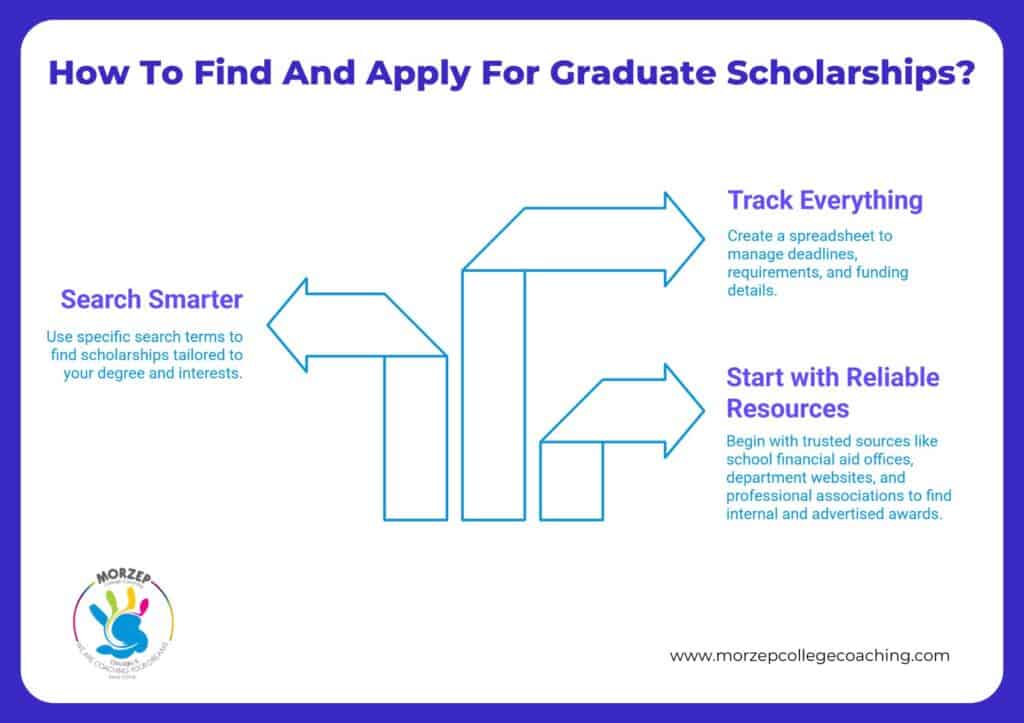
Start With the Most Reliable Resources for Graduate Students
If you’re serious about applying, begin with trusted sources:
- Your school’s financial aid office – They often know about internal awards and school scholarships that aren’t widely advertised.
- Your department’s website – Many graduate programs list funding opportunities specific to students who are pursuing that degree.
- Professional associations related to your field – For example, nursing, social work, education, business, and engineering organizations frequently offer graduate scholarship programs.
- National databases like Fastweb and Scholarships.com – These include awards for undergraduate or graduate school applicants.
If you’re going back to school, don’t overlook alumni offices and local community scholarship funds. Some scholarships may be reserved for students who must have graduated from a specific college or university.
Search Smarter, Not Harder
When students are pursuing a degree, vague searches won’t help. Be specific.
Instead of searching “grad school scholarships,” try:
- “Master’s degree in education scholarships USA”
- “Scholarships for nursing graduate students interested in leadership”
- “Doctoral fellowship for students pursuing social work”
Always confirm:
- Eligibility requirements
- Whether applicants must have already been accepted into a graduate program
- What documents are required to submit
- The purpose of the scholarship and what the scholarship program provides
Some programs cover the full tuition. Others provide partial funding or living expenses.
Also, check whether preference is given to certain groups, such as women pursuing graduate degrees, first-generation students, or students with financial need.
Track Everything and Stay Ahead of the Deadline
Organization is where many graduate students miss out.
If you want to apply for scholarships consistently, create a simple spreadsheet that includes:
- Scholarship name
- Deadline
- GPA minimum
- Required to submit documents (essay, transcripts, FAFSA confirmation)
- Whether the scholarship program provides tuition support only or additional funding
- Notes about eligibility
Many graduate students interested in funding forget that deadlines can arrive months before the academic year begins. Missing a deadline is one of the most common mistakes in grad school funding.
Graduate and professional students who stay organized, research thoroughly, and apply broadly significantly increase their chances of receiving funding.
Is it harder to get scholarships for grad school?
Not necessarily. Graduate scholarships can be competitive, but they’re often more specialized. If your goals align with the program’s purpose, your chances can actually improve.
Best Scholarships for Graduate Students in the USA
Some graduate scholarship opportunities are nationally recognized and highly competitive, but they’re also incredibly valuable. Many of these programs provide financial assistance that can cover tuition and sometimes living expenses.
Here are several of the best-known programs students should explore.
National and Major Graduate Scholarship Programs
- The National Science Foundation Graduate Research Fellowship Program provides significant funding for STEM graduate students, including a stipend and tuition support. It’s one of the most prestigious fellowship opportunities for students pursuing research-focused graduate studies.
- The SWE Scholarship Program supports women pursuing graduate degrees in engineering, computer science, and related fields. Female students enrolled in an accredited graduate program are eligible, and awards vary in size.
- The Ford Foundation Fellowship Program supports doctoral students committed to teaching and research in higher education. This fellowship provides financial assistance, a stipend, and professional development opportunities.
- The Fulbright U.S. Student Program offers funding for graduate students pursuing study, research, or teaching abroad. Many students use Fulbright funding to support a master’s or doctoral degree internationally.
- The Paul & Daisy Soros Fellowships for New Americans provide funding for immigrants and children of immigrants pursuing graduate and professional degrees in the USA.
These programs are competitive but can significantly reduce graduate school tuition and related costs.
Field-Specific Graduate Scholarships
Field-based scholarship programs are often less competitive and highly targeted.
- Nursing students can explore the Nurse Corps Scholarship Program, which provides grants used for tuition and living expenses in exchange for service commitments.
- Students pursuing social work can look into foundation scholarships through organizations like the National Association of Social Workers, which offers funding opportunities for graduate students pursuing community-based careers.
- Students pursuing a master’s degree in education can explore TEACH Grants, which provide financial assistance for those who commit to teaching in high-need areas.
Scholarships for Women and Underrepresented Students
Scholarships for women are widely available through professional associations and private foundations. Many programs are open to female students pursuing graduate and professional degrees in fields such as STEM, public health, business, and education.
Organizations that offer a variety of scholarships include:
- Fellowships & Grants – AAUW : Empowering Women Since 1881
- Hispanic Scholarship Fund (graduate awards available)
- Point Foundation Scholarships for LGBTQ+ graduate students
Many scholarship programs give preference to students who are currently enrolled in a graduate program at an accredited college or university. Others are open to students interested in applying to graduate school in the upcoming year.
The key takeaway is simple: scholarships are available across fields, degree programs, and student backgrounds. With consistent searching and a thoughtful application process, graduate students can uncover funding opportunities that significantly reduce the cost of earning a graduate degree.
Can you get a full scholarship for a master’s degree?
Yes, it’s possible. Some scholarship programs and fellowships cover the full cost of tuition and may even include living expenses, especially in research or high-need fields.
The Graduate Scholarship Application Process
The scholarship application process for graduate school can feel intimidating at first. But once you break it down, it’s manageable and very similar across most programs.
Most graduate school scholarships require:
- A personal statement
- Academic transcripts
- Letters of recommendation
- Proof of enrollment in a graduate program (or acceptance letter)
- FAFSA confirmation, if financial need is considered
Some scholarship programs also ask for a resume, research proposal, or documentation of community service. Always read the instructions carefully so you know exactly what is required to submit.
Step 1: Review Eligibility Carefully
Before you start writing anything, confirm eligibility.
Some scholarships are open to undergraduate and graduate students. Others are limited to:
- Students pursuing a master’s degree
- Doctoral students
- Students currently enrolled in an accredited graduate program
- Applicants with a minimum GPA
- Students with demonstrated financial need
Applicants must make sure they meet all requirements. If you’re unsure, check the frequently asked questions section or contact the scholarship provider directly.
Step 2: Track the Deadline
Graduate scholarship deadlines can come earlier than you expect, sometimes 6 to 9 months before the academic year begins. Missing the deadline automatically disqualifies even the strongest applicant.
Create reminders and build scholarship deadlines into your grad school planning timeline.
Step 3: Gather and Organize Documents
Most programs require:
- Official transcripts
- FAFSA confirmation (if applicable)
- Recommendation letters
- Enrollment verification
Give recommenders at least three to four weeks’ notice. Graduate students who plan ahead avoid last-minute stress.

Step 4: Tailor Your Essay to the Purpose of the Scholarship
This is where many students miss an opportunity.
Don’t recycle a generic personal statement. Instead:
- Explain why you’re pursuing a graduate degree
- Show how the scholarship aligns with your career goals
- Demonstrate how funding will support your education and impact
If the scholarship program provides support for leadership, highlight leadership. If it supports research, emphasize your academic focus.
Step 5: Apply Broadly
Research published in the Journal of Student Financial Aid shows that students who apply for multiple scholarships significantly increase their likelihood of receiving funding.
In short: don’t put all your hope into one award.
Apply broadly. Apply early. And treat the scholarship application process like part of your graduate program strategy. The effort adds up, and it can make a meaningful difference in your graduate school tuition and overall financial picture.
Are there scholarships for international graduate students?
Yes. Many universities, foundations, and global programs offer scholarships for international graduate students. Look for school-based funding, fellowships, and programs like Fulbright.
We Help Students Plan Smarter. Get in Touch!
At Morzep, we help undergraduate and graduate students think long-term.
For high school students, we build strong academic profiles early, positioning them for future college scholarships and graduate scholarship opportunities.
For college students and those pursuing a master’s or doctoral degree, we:
- Identify funding opportunities available
- Track scholarship deadlines
- Guide the scholarship application process
- Provide essay support
- Coordinate with your school’s financial aid office
Whether you’re currently enrolled in a graduate program or just starting to explore grad school, our goal is simple: help you pursue your degree with clarity and confidence.
If you’re interested in applying and want expert guidance, reach out today. Let’s build a smart strategy for your graduate school journey.