


If you’ve been asking, does FAFSA cover graduate school, you’re already thinking ahead in a really smart way. Whether you’re a high school student planning your future, a college junior thinking about a master’s degree, or a parent trying to understand long-term costs, this question comes up more often than you’d think.
Graduate school can open doors to new careers and higher earning potential. It can also come with a higher price tag. According to the College Board, graduate tuition and fees can range widely depending on the program, and many students rely on federal student aid to help pay for it.
In this guide, you’ll learn:
- How FAFSA for graduate students actually works
- What kind of financial aid for graduate school is available
- How much FAFSA grad students can get
- How to apply for FAFSA and avoid missing deadlines
By the end, you’ll feel more confident about how to apply, what to expect, and how to make smart financial decisions for the future.
Speak with a college coach today!
Speak with an expert college coach and learn if working with one is right for your academic journey. Free 15-minute consultation, no cost, no obligations.
Can Graduate Students Apply for FAFSA?
When people hear about FAFSA (Free Application for Federal Student Aid), they often think of undergraduate grants and scholarships. So it’s no surprise that many families wonder whether FAFSA covers graduate school in the same way. The short answer is yes, but it looks a little different.
For graduate students, FAFSA is still the gateway to federal student aid. However, most aid comes in the form of federal loans rather than grants. According to the U.S. Department of Education’s Federal Student Aid office, graduate students are typically eligible for:
- Direct Unsubsidized Loans, which allow students to borrow up to $20,500 per year
- Grad PLUS loans, which can help cover remaining tuition and expenses
- Institutional scholarships or assistantships offered by the school
Unlike undergraduate students, graduate students generally do not receive federal Pell Grants. That doesn’t mean FAFSA isn’t important. It still determines eligibility for federal aid, and many schools require it before offering institutional support.
Understanding this difference early helps families avoid surprises. FAFSA still plays a major role in paying for graduate school. It simply functions as a loan gateway more than a grant provider.
How much will FAFSA give me for graduate school or a master’s degree?
FAFSA doesn’t give one set amount. The FAFSA pay amount depends on your school’s cost and enrollment, and it’s one form of financial aid that helps cover costs rather than fully paying for school.
FAFSA for Graduate Students Opens the Door to Federal Aid
FAFSA for graduate students works through the same FAFSA application used by undergraduate students. There is no separate FAFSA form for a master’s or graduate degree. If you’re pursuing a degree beyond a bachelor’s, you still need to complete the FAFSA.
Graduate students are considered independent students. This is important because:
- Parent income is usually not required
- Students are considered independent for financial aid
- Eligibility is based on the graduate student’s own finances
This change can sometimes increase access to financial support.
If you plan on going to graduate school, you must fill out the FAFSA each year. You need to submit your FAFSA annually to remain eligible for federal aid. Many schools also require FAFSA results before offering institutional financial aid packages.
Is it harder to qualify for financial aid for grad school?
Graduate students may find that aid works differently. It’s not necessarily harder, just a different type of support designed to help cover a master’s or other graduate degree.
Completing the FAFSA for Graduate School Each Year Keeps Aid Available
If you plan to attend grad school, one of the most important habits to build is completing the FAFSA every year. Federal financial aid isn’t a one-and-done process. You need to file the form annually to stay eligible for loans and any school-based aid tied to your FAFSA results.
Submitting the FAFSA each year allows your school’s financial aid office to create an updated aid package based on your current situation. Even small changes in income, enrollment status, or program costs can affect how much aid you’re offered, so it’s worth taking the time to file.
Here’s what the application for Federal Student Aid usually looks like:
- Create or log in to your FSA ID
- Gather your tax returns and income documents
- Complete the FAFSA online at the official Federal Student Aid site
- Submit before both federal and school deadlines
- Review your financial aid offer from your school
The FAFSA for graduate school typically opens in the fall for the following academic year. Many graduate programs set priority deadlines earlier than the federal deadline, and some funding is first-come, first-served. Filing early can improve your chances of receiving institutional scholarships, assistantships, or other aid.
Even if you think you might not qualify for much aid, it’s still smart to submit the FAFSA. Some schools require it before offering any form of financial support. Filing keeps your options open and ensures you don’t miss out on funding that could help cover tuition and living expenses while you’re in graduate school.
What Financial Aid for Graduate School Can and Cannot Cover
Now that we’ve looked at how FAFSA for graduate students opens the door to federal aid, the next big question is: how much does it actually pay for? This is where many students and families get a little confused.
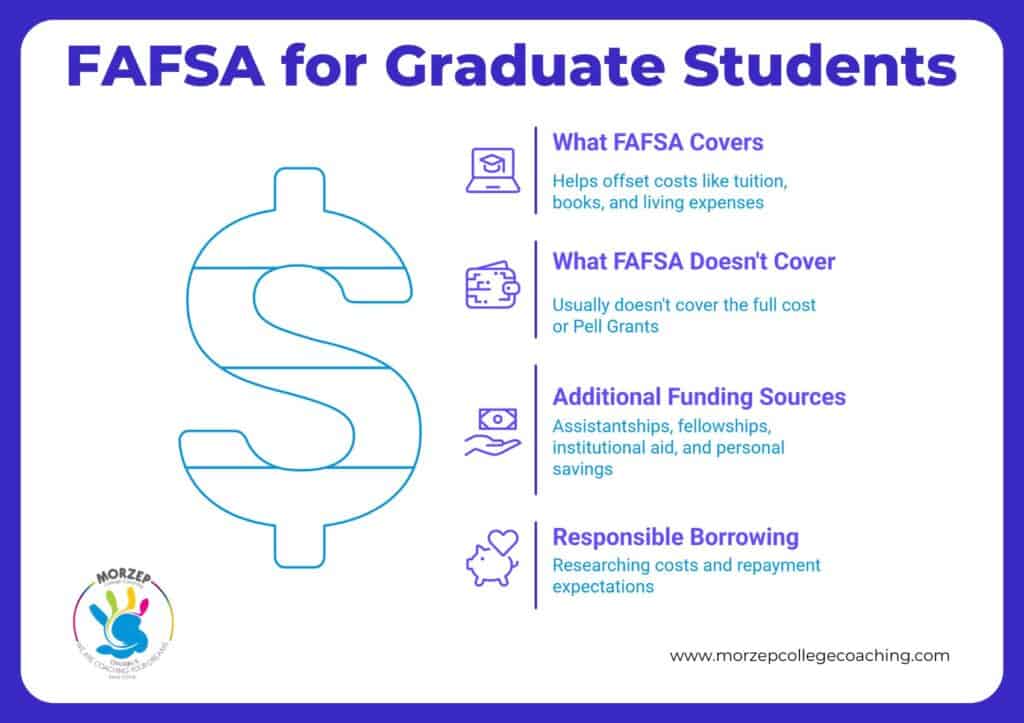
FAFSA is an essential step in getting financial support for grad school, but it usually doesn’t cover the entire cost on its own. Instead, it gives you access to federal financial aid options that help offset expenses and make graduate programs more manageable. It can be used toward:
- Tuition and required fees
- Books and supplies
- Housing and living expenses
- Transportation
- Health insurance (in some cases)
The total amount of aid available depends on your school’s official cost of attendance and your enrollment status. You can review how this is calculated on the official Federal Student Aid website.
Here’s what FAFSA usually does not cover on its own:
- The full cost of graduate school, in most cases
- Federal Pell Grants (these are generally for undergraduate students)
- All living expenses without additional funding sources
Some graduate students receive assistantships or fellowships that help cover tuition or provide a stipend. Many graduate students combine federal loans with institutional aid or personal savings to pay for school.
Because the cost of graduate school can vary widely by program and career path, it’s smart to research early. Understanding total costs, loan interest rates, and repayment expectations can help students borrow responsibly and avoid unnecessary debt.
What is the FAFSA deadline?
The federal deadline for FAFSA is usually in late June, but schools set earlier priority dates. To get the best aid package, submit your FAFSA early each year.
Why Learning About FAFSA for Grad Students Early Matters
One of the best things students and families can do is learn how financial aid works before graduate school is on the immediate horizon. Understanding FAFSA for grad school early helps you make smarter choices about borrowing, choosing programs, and planning for the real cost of education.
The Free Application for Federal Student Aid isn’t just something you fill out senior year of college. It’s a tool you may use for many years if you pursue a master’s or other graduate and professional degree.
For example, many students don’t realize that undergraduate borrowing affects how much aid is available later. Federal loan limits carry over. So if you plan to pursue a master’s program, being mindful of loans early on can make it easier to get financial aid for graduate school later.
High school and college students may benefit from knowing:
- FAFSA opens every year, and students need to apply for federal aid annually
- Graduate students are not eligible for most federal grant programs
- Most aid for graduate students comes in the form of loans to cover tuition and living expenses
- The cost of grad school varies widely depending on the field and program

College students who think they might pursue graduate programs should start asking practical questions:
- What does the cost of grad school look like in my field?
- Will I need a master’s degree to reach my career goals?
- What financial aid options for graduate school are available?
- How much aid for graduate students do programs typically offer?
Taking small steps now makes a big difference later. Students can:
- Track federal loan totals each year
- Research assistantships and scholarships that help cover the cost
- Talk to their school’s financial aid office about future aid options
- File the FAFSA each year to stay eligible for federal financial aid
When students understand how to apply for federal aid, when deadlines matter, and what aid options are available to graduate students, they feel more in control.
Does FAFSA cover master’s?
Yes, FAFSA can help with a master’s degree. It typically doesn’t pay for everything, but it’s the main way graduate students apply for federal aid.
We Help You Plan with Confidence for Your Academic Future
Understanding FAFSA, financial aid options, and long-term education costs can feel overwhelming. That’s where Morzep College Coaching makes a difference.
We help high school students build a strong college plan while also thinking ahead to graduate school. We guide families through FAFSA conversations early so there are fewer surprises later.
For college students, we offer support with graduate school planning, financial aid strategies, and comparing program costs. Our goal is to help students make informed choices that protect both their academic future and their financial well-being.
Having a knowledgeable partner can make the entire process feel more manageable. And when you understand how financial aid works from the start, you’re better prepared for every step ahead. Get in touch to learn more!