


If junior year already feels heavier than the two before it, that’s not just in your head. 75% of high school students report feeling consistently stressed, according to the American Institute of Stress, and junior year is usually where that pressure peaks first.
Here’s the good news: most of that stress comes from not knowing what you’re supposed to be doing and when. Once you can see the whole year laid out, it gets a lot more manageable. Here’s what’s in this guide:
What actually makes junior year different from freshman and sophomore year
Why this year feels heavier, and a few honest ways to handle it
A fall semester checklist: grades, PSAT, and your counselor
A spring semester checklist: testing, your college list, and campus visits
What to knock out before summer ends
Speak with a college coach today!
Speak with an expert college coach and learn if working with one is right for your academic journey. Free 15-minute consultation, no cost, no obligations.
High School Junior Year: What to Expect
Junior year is the one colleges scrutinize most closely, since it’s usually your most recent full year of grades by the time you apply. It’s also when the academic workload tends to jump, with more Advanced Placement classes, a heavier reading load, and the first real standardized tests that matter for college.
None of that is a reason to panic. It’s just why this year gets more attention than the other three.
It’s also worth pausing here for a second. Junior year is usually the first time students seriously ask themselves what they’re actually good at and what they enjoy, not just what’s required. That reflection matters more than people give it credit for. It’s what eventually shapes your college list, your essay topics, and even which extracurriculars are worth sticking with.
Junior Year Stress: Why This Year Feels Heavier (and How to Handle It)
A few things are genuinely stacking up at once. 83% of teens cite academic pressure as a major source of stress, and junior year is where grades, testing, and the first real conversations about “the future” all collide. On top of that, admission rates at many selective colleges have dropped sharply over the past few decades, so today’s juniors are competing for spots their parents’ generation didn’t have to fight nearly as hard for.
The fall stretch tends to hit hardest, since the PSAT, a heavier course load, and your first real counselor conversation about the future all land in the same few months. That pile-up is normal, not a sign you’re behind.
A few things that genuinely help:
Break the year into chunks. A semester feels more manageable than “junior year” as one giant blob.
Protect actual downtime. A weekend without homework won’t derail your GPA.
Talk to someone when it’s too much. A counselor, a parent, a friend, whoever you’ll actually be honest with.
Remember that this checklist isn’t a race. Different students hit these milestones at different speeds, and that’s normal.
How important are junior year grades and GPA for college applications?
Very. Junior year is usually your most recent full year of grades by the time you apply, so colleges weigh it more heavily than freshman or sophomore year. It’s the last full opportunity to meaningfully strengthen your GPA before applications go out.
It’s Not Just What You Do, It’s How You Do It
Here’s something that doesn’t get said enough: grades aside, admissions officers consistently rank character close behind them, ahead of test scores, activities, and even letters of recommendation. Not “character” in some vague, feel-good sense. They mean curiosity, follow-through, and whether you actually cared about the things you spent time on.
That changes how you should think about this year. It’s not about collecting an impressive list of activities. It’s about doing a few things you actually care about, and doing them well enough that it shows.
Your Junior Year Checklist: Fall Semester
Keep your grades steady. Your junior year GPA matters more than any other single year, since it’s colleges’ most recent full picture of you.
Take the PSAT in October. It also serves as your qualifier for National Merit Scholarship consideration, so it is worth taking seriously even if college feels far off. If cost is a concern, ask your counselor about fee waivers; they’re available for the PSAT, SAT, and ACT, and most students don’t realize that until someone tells them.
Meet with your counselor about course rigor. This is the year to be honest about whether your course load is challenging enough. Talk through AP or Honors options for senior year, and ask directly whether your current schedule reflects what colleges will expect to see from someone with your goals.
Start exploring, loosely. Look into a few career areas or fields of study that interest you. You don’t need a firm answer yet.
Start a running résumé. Keep a simple, ongoing list of your activities, awards, and any work experience. It feels unnecessary now, but it saves you from scrambling to remember details when application season actually starts.
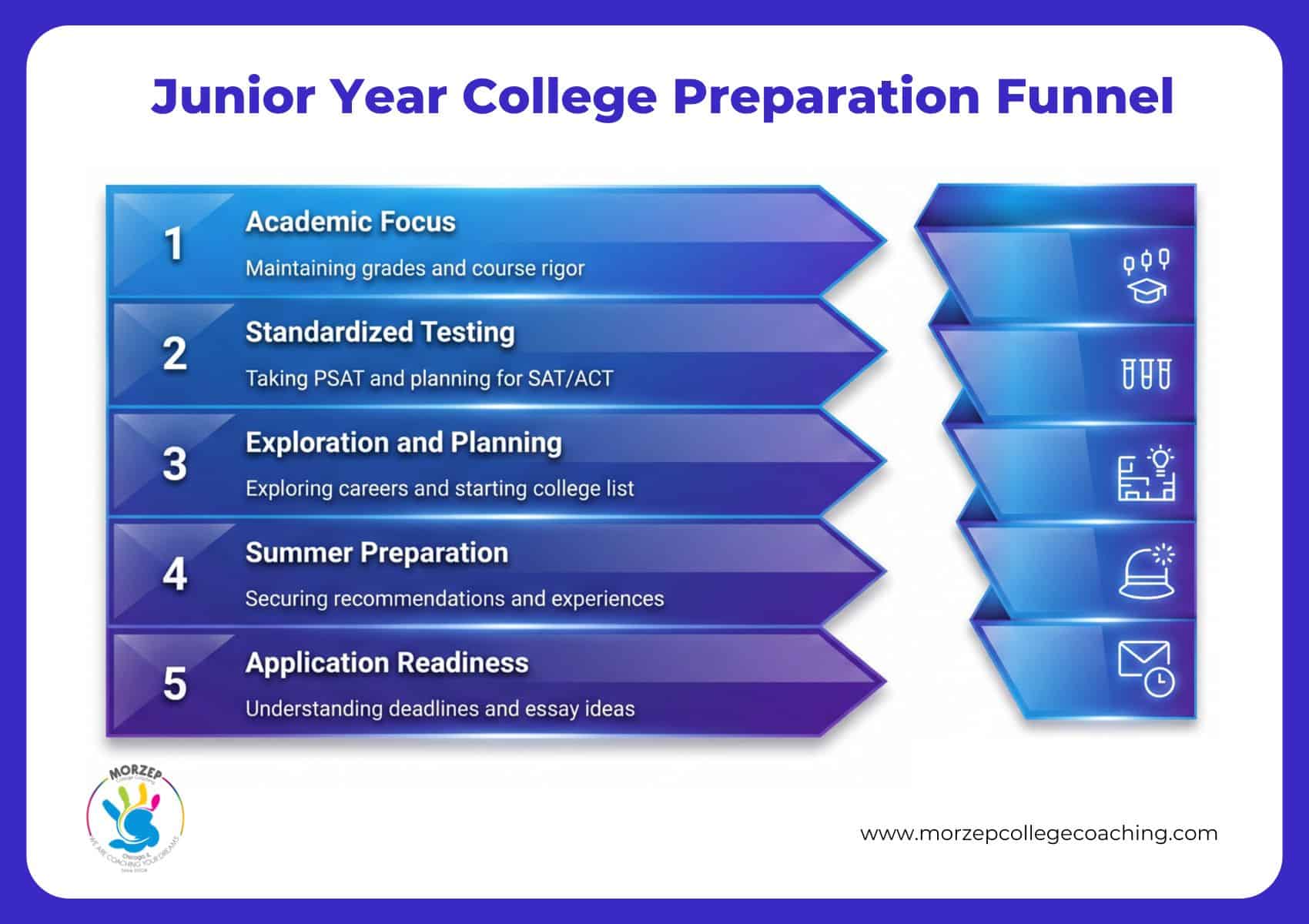
Your Junior Year Checklist: Spring Semester
Make a testing plan. Most juniors take their first SAT or ACT in the spring, with registration windows opening 6 to 8 weeks ahead of each test date. Decide which test fits you better (many students take a practice version of each first), then lock in a date early since spots at popular test centers fill up fast.
Start your college list. A first pass, nothing final, just a working list of schools that seem like a reasonable fit academically and otherwise.
Go on college visits if you can. Whether in person or virtual, college visits are common during spring break.
Attend a college fair. It’s a low-pressure way to hear from a lot of schools in one afternoon.
Look into pre-college summer programs. Many colleges run short summer sessions for high schoolers. They’re a low-stakes way to get a feel for campus life before you’re committing to anything.
Have the money conversation early. Talk with your family about what’s realistic. Our FAFSA breakdown is a useful starting point even a year out.
When should I take the SAT or ACT during junior year?
Most students take their first attempt in the spring, registering 6 to 8 weeks ahead of the test date since popular test centers fill up fast. Many retake it in the fall of senior year if they want to improve their score.
Before Summer Ends
Ask two teachers for letters of recommendation. Pick teachers who know your work well, and ask before the school year ends so it’s not a last-minute scramble in the fall.
Find volunteer work or a summer job. Colleges care more about consistency and genuine involvement in your extracurricular activities and community service than a long list of one-off clubs.
Look for a leadership opportunity, even a small one. Running a club, captaining a team, or organizing a school event says more than a title ever does. It doesn’t need to be impressive on paper; it needs to be real.
Start brainstorming your essay. You don’t need a draft yet, only a few ideas about which essay prompts feel like a genuine fit for your story.
Get familiar with deadline types. Early Action, Early Decision, and Regular Decision all work differently, and it’s worth understanding the difference before senior year applications open.
Skim the bigger picture. The college application process has a lot of moving parts once senior year starts, including everything from deadlines to financial aid to final submission.
What is a good GPA for a junior in high school?
It depends on your target schools, but a 3.5 or higher keeps most options open, including competitive ones. The exact number matters less than the trend, colleges want to see grades holding steady or improving, not dropping.
Ready to Build a Plan for Junior Year?
Junior year doesn’t have to feel like a guessing game. At Morzep, we help students and families turn a year like this into a clear, manageable plan that fits your specific goals rather than following a generic timeline. Schedule a consultation with our team to get started.
Since you’re already thinking ahead, check out our coaching built specifically for 11th graders to see how we can help this year go more smoothly.